

Chamomile is best known as a calming herbal tea, but it has a long history of use in skincare too. Traditionally valued for its soothing properties, this small flowering plant contains naturally occurring compounds that have attracted interest from researchers studying inflammation and skin irritation.
It's an ingredient you'll find in products designed for dry, sensitive and easily irritated skin. But what does chamomile actually do, and is there good reason to include it in your skincare routine?
Here's what you need to know.
What is chamomile?

Chamomile is the common name for several daisy-like plants in the Asteraceae family. The two most widely used varieties are German chamomile (Matricaria recutita, also known as Chamomilla recutita) and Roman chamomile (Chamaemelum nobile).
Both have a long history in traditional herbal preparations, but they have different chemical profiles.
German chamomile is particularly valued in skincare because it contains naturally occurring compounds including bisabolol and chamazulene. These are among the constituents studied for their potential soothing and anti-inflammatory properties.
The quality and composition of a chamomile extract can vary depending on the plant, the growing conditions and how it is processed. That means not all chamomile ingredients are necessarily equivalent.
1. Chamomile can help soothe irritated skin
One of chamomile's best-known traditional uses is to calm irritated skin.
Certain compounds found in German chamomile have been investigated for their anti-inflammatory activity. Laboratory and other research suggests that some of these compounds can influence inflammatory processes, although this doesn't mean that every chamomile skincare product will have the same effect.
For skin that feels dry, uncomfortable or easily irritated, chamomile can be a useful supporting ingredient in a well-formulated moisturising product.
It is particularly relevant in products intended for skin that needs gentle conditioning and care.
2. It has antioxidant properties
Chamomile contains naturally occurring plant compounds, including flavonoids, that have antioxidant activity.
Antioxidants help counter the effects of free radicals, unstable molecules generated by factors such as UV exposure and environmental pollution. Excess free-radical activity can contribute to oxidative stress in the skin.
This is one reason chamomile is used in skincare formulations intended to help care for skin exposed to everyday environmental stress.
However, antioxidant activity measured in a laboratory doesn't automatically translate into a specific visible benefit on the skin. The extract, its concentration and the finished formulation all matter.
3. Chamomile is traditionally used for dry and sensitive skin
Chamomile is often included in skincare designed for delicate or easily irritated skin.
It isn't a moisturiser in itself, so it won't replace ingredients that hydrate the skin or help reduce moisture loss. Its role is better understood as part of a broader formulation.
For example, a product combining chamomile with aloe vera, glycerine, plant oils or shea butter can offer several complementary functions:
-
Humectants such as glycerine help attract and retain water.
-
Plant oils and butters help soften the skin and reduce moisture loss.
-
Chamomile provides botanical compounds traditionally used to soothe irritated skin.
The balance of the formula is important. A calming botanical extract is only one part of what makes a skincare product suitable for sensitive skin.
4. Chamomile and the skin's natural barrier
When the skin barrier is disrupted, skin can become dry, tight and more reactive. Supporting the barrier is therefore an important part of caring for sensitive skin.
Chamomile is of interest because of its potential anti-inflammatory properties, but it shouldn't be described as a barrier repair ingredient on its own.
A better approach is to use it alongside moisturising and conditioning ingredients that help maintain the skin's protective outer layer.
This is particularly relevant for skin that is exposed to frequent washing, cold weather, dry indoor air or other everyday sources of irritation.
5. Why the type and quality of chamomile extract matter
You may see chamomile listed in skincare as Chamomilla recutita flower extract or Matricaria recutita flower extract.
These are botanical names for German chamomile.
How the extract is produced can influence which plant compounds are retained. Some extraction methods are designed to concentrate particular naturally occurring constituents, while others produce a different range of compounds.
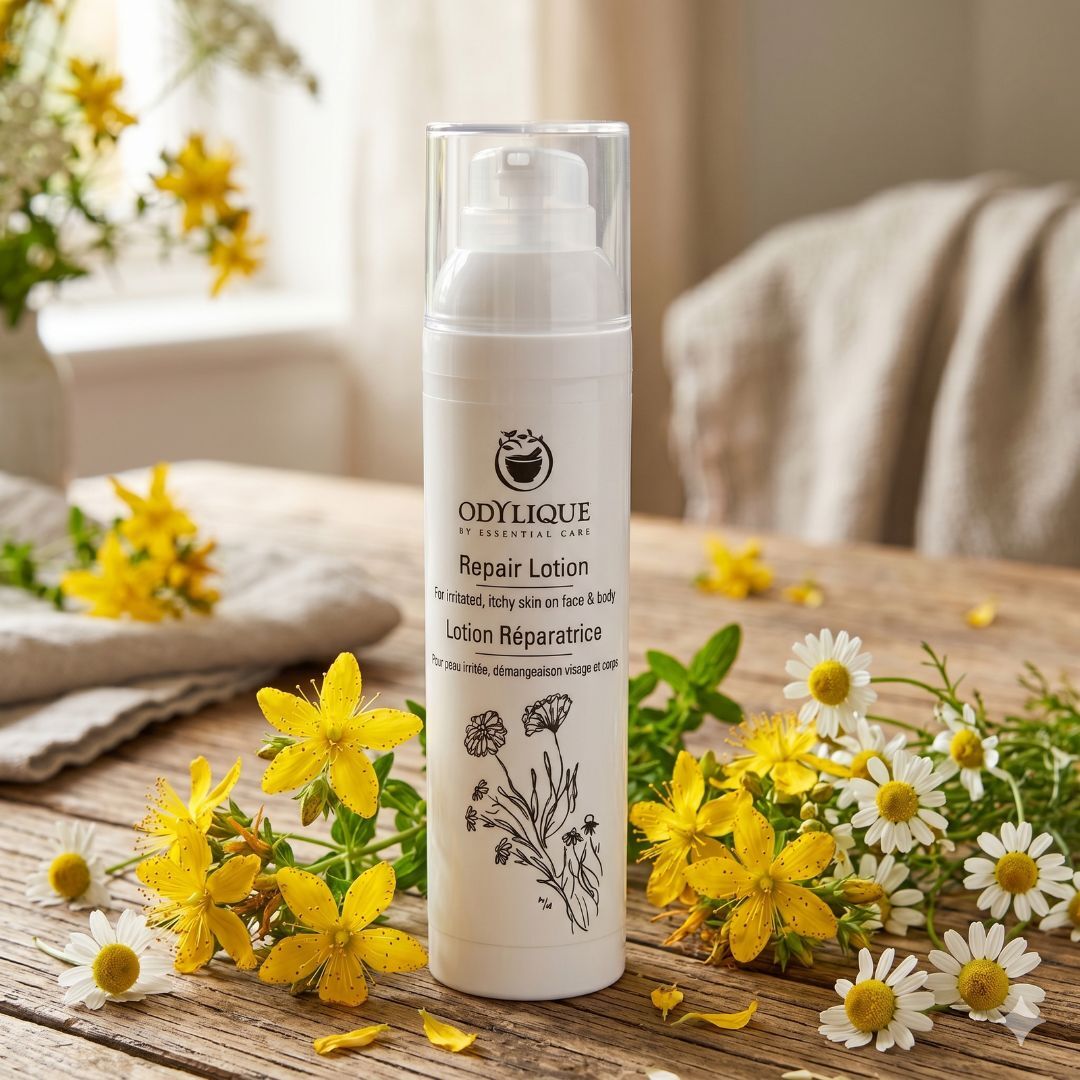
At Odylique, we use concentrated German chamomile extract in selected formulations, including our Repair Lotion. The extract is combined with other botanicals traditionally used in soothing skincare, including calendula and chickweed.
This combination is intended to provide complementary plant-based care for dry, uncomfortable skin.
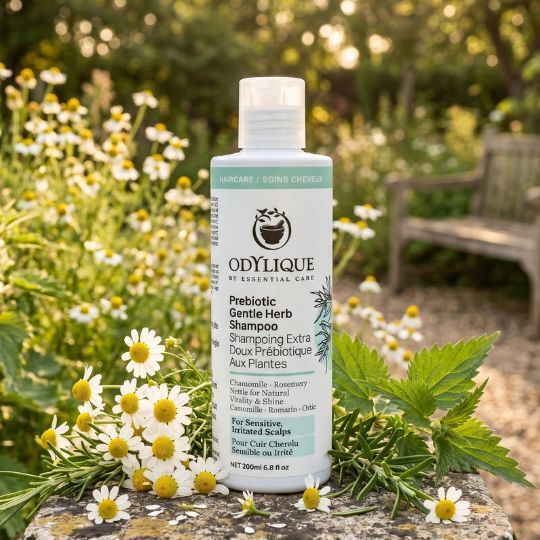
Chamomile also features in our Prebiotic Gentle Herb Shampoo and Prebiotic, Chamomile & Coconut Conditioner, where it forms part of formulas designed to care for the scalp and hair.
6. Can chamomile cause skin irritation?
Although chamomile is often associated with gentle skincare, it isn't suitable for absolutely everyone.
Chamomile belongs to the Asteraceae family, which also includes ragweed, chrysanthemums, daisies and marigolds. Some people who are sensitive or allergic to plants in this family may react to chamomile too.
People with very reactive skin should remember that a natural ingredient can still cause an allergic reaction. Natural often means more suitable for sensitive skin, but doesn't automatically mean allergy-free.
7. How to include chamomile in your skincare routine
If your skin tends to feel dry, uncomfortable or easily irritated, look for a well-formulated product that combines chamomile with ingredients that support hydration and skin comfort.
Odylique's Repair Lotion contains concentrated German chamomile extract alongside calendula, chickweed, aloe vera, olive oil and shea butter. It's designed to soothe and condition dry, itchy or uncomfortable skin.
For scalp and hair care, chamomile is also included in our Prebiotic Gentle Herb Shampoo and Prebiotic, Chamomile & Coconut Conditioner. These formulas combine it with other plant-derived ingredients, including prebiotic chicory extract in the shampoo and conditioner.
The best choice depends on where you want to use it and what your skin or scalp needs. Always check the full ingredients list before use, particularly if you have known plant allergies.

Is chamomile worth looking for in skincare?
Chamomile has a long history in traditional skincare, and research into its naturally occurring compounds provides some scientific interest in its soothing and anti-inflammatory potential.
It's not a cure for eczema, rosacea or other skin conditions, and it won't suit everyone. But as part of a thoughtfully formulated product, it can be a brilliant botanical ingredient for caring for dry and easily irritated skin.
As ever, the whole formulation matters more than one ingredient in isolation. Chamomile works best as part of skincare that also supports hydration, softness and the skin's natural protective barrier.