
We tend to think of botanical skincare ingredients as coming from flowers, leaves, fruits and seeds. But plants have other tricks up their sleeves, or trunks to be precise.
Two of the ingredients we use at Odylique come from trees, yet neither comes from the part you might expect: one, galactoarabinan, is extracted from larch wood, while the other, phytocollagen, comes from the natural gum produced by acacia trees.
Neither is a conventional plant extract in the way you might expect from an ingredient such as aloe vera or rosemary. They’re both complex natural polymers, and each comes from a very different part of its tree.
And there's yet another tree ingredient worth knowing about: birch sap, which is used in some skincare formulations as a moisturising and conditioning ingredient.
So what makes these ingredients so useful in skincare?
Larch tree: the source of galactoarabinan
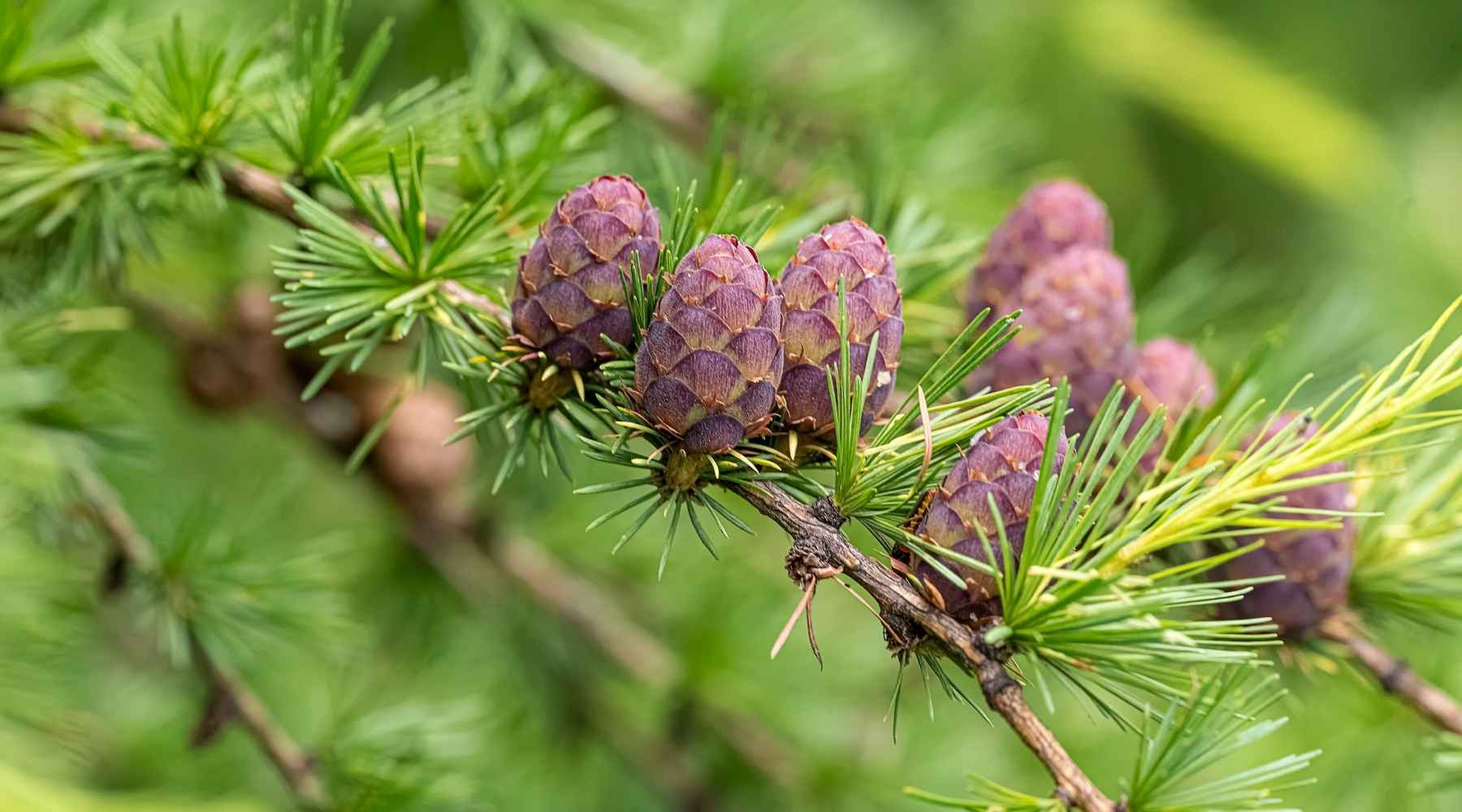
Galactoarabinan is a naturally occurring polysaccharide found in trees of the Larix, or larch, genus. It’s made up principally of the sugars galactose and arabinose.
And here's the first surprising thing about it: it's the wood of the tree that's particularly rich in this material, not the bark.
Larch wood can be processed to extract its naturally occurring arabinogalactan, producing the ingredient known as galactoarabinan.
That might sound rather technical, but the structure galactoarabinan gives the tree, gives it some very useful properties for skincare.
When applied to the skin, galactoarabinan can form a very fine, flexible film over the surface. This helps reduce the amount of water that escapes from the skin, supporting hydration and leaving skin feeling smoother and more comfortable.
In other words, rather than simply adding water to the skin, it helps keep moisture where it belongs.
A natural moisturising helper
Healthy skin needs to maintain a balance between water entering and leaving the outer layers. When too much water is lost, skin can become dry, tight and uncomfortable.
Galactoarabinan is interesting because it works partly through its physical structure. Its film-forming properties help reduce transepidermal water loss, while also improving the way a skincare formula spreads across the skin.
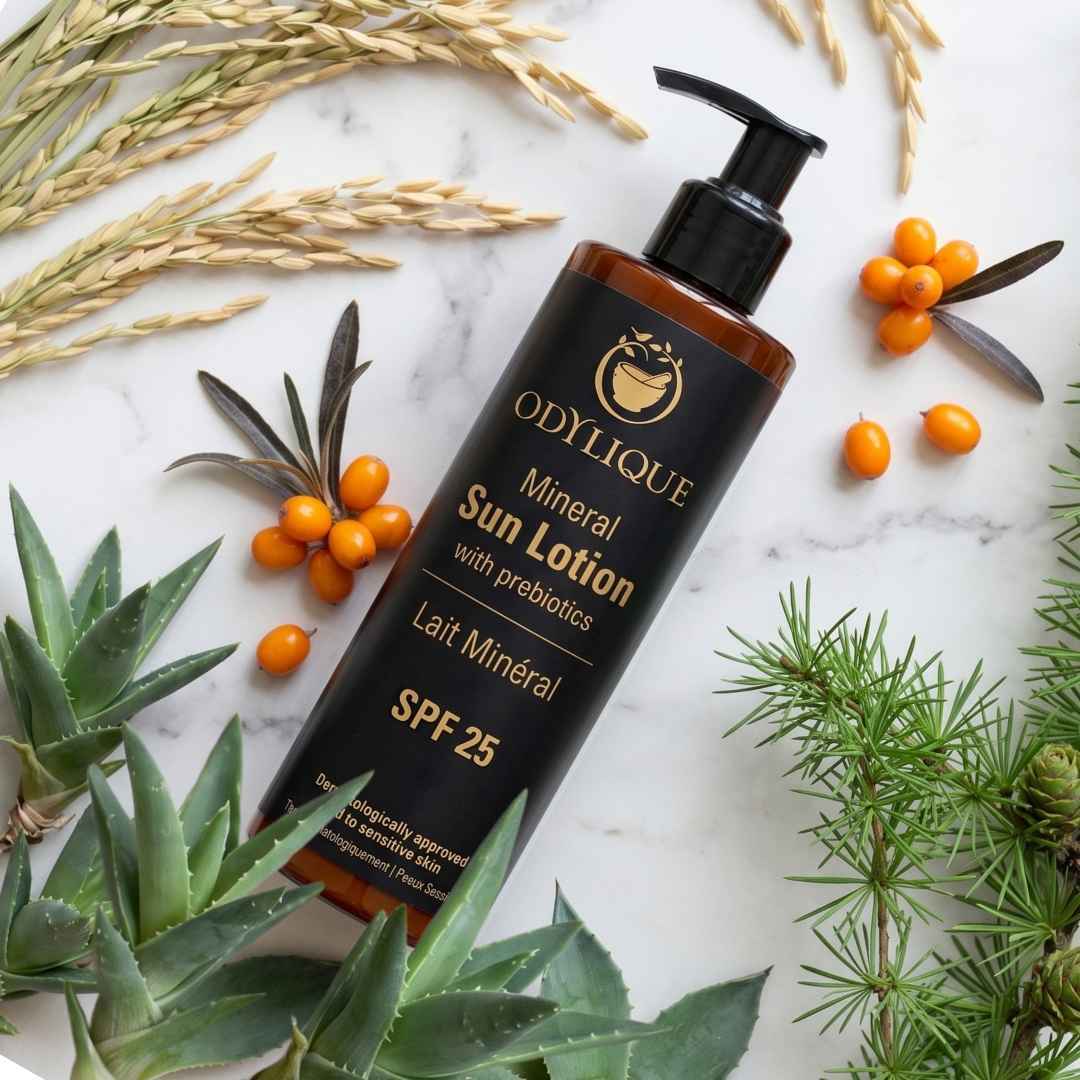
This is one reason we use it in our Mineral Sun Lotion SPF 25. Sun exposure can be drying as well as damaging, so alongside antioxidants and soothing plant extracts, galactoarabinan helps support skin hydration when it’s under UV stress.
More than just moisture
There’s another clever property of galactoarabinan: research has found that it can help improve the appearance of superficial fine lines and support smoother-looking skin.
Its film-forming nature also makes it useful for improving the feel and performance of formulations. It can help an emulsion spread more evenly over the skin and work alongside other active ingredients.
So while a larch tree might not be the first thing that comes to mind when you think about moisturising skincare, its natural polysaccharides have some remarkably useful properties.
Acacia tree: nature's plant-based 'collagen'
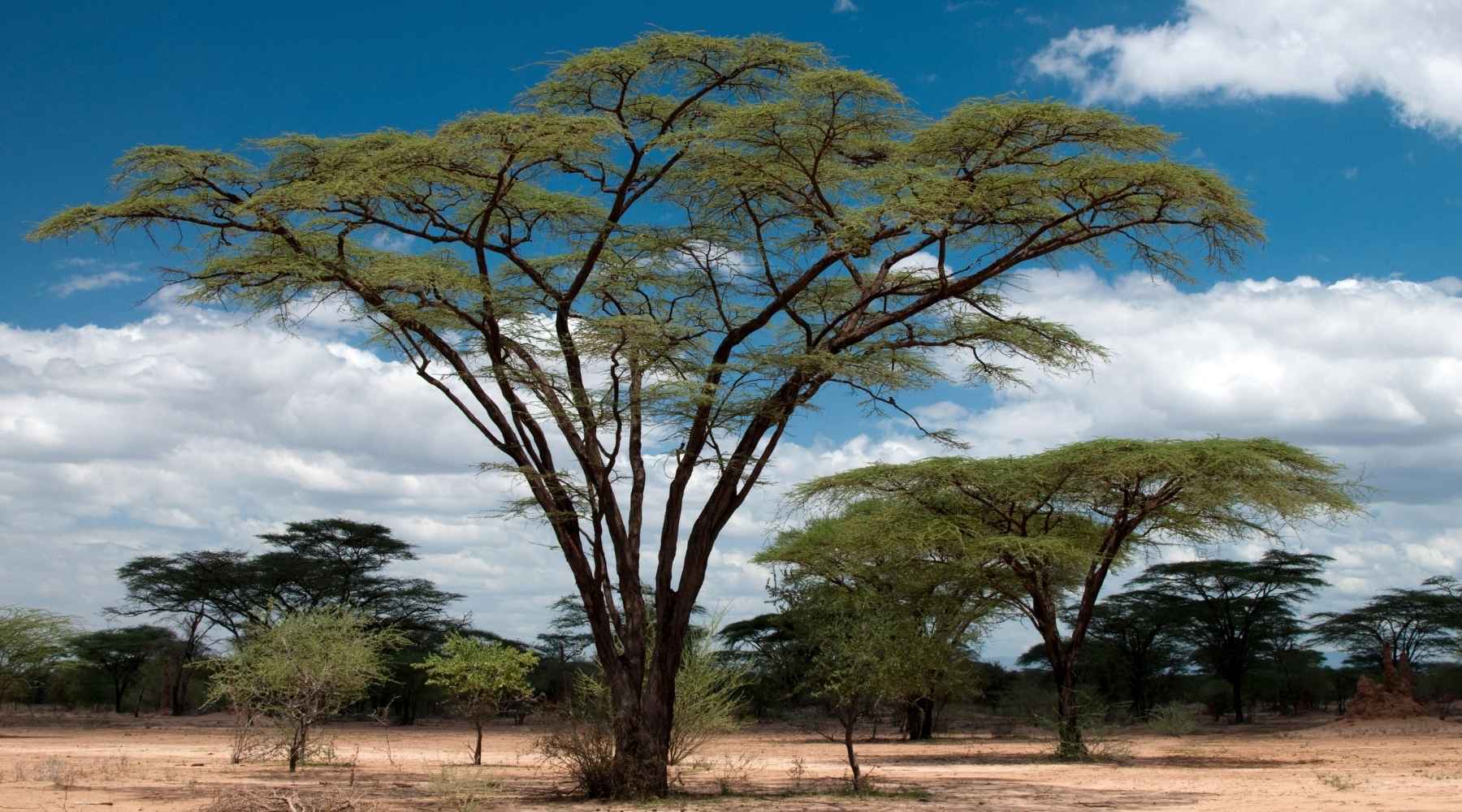
Our second clever tree is the acacia.
You may have heard of acacia gum, also known as gum arabic. It’s a natural substance obtained from the hardened gum exudate of certain acacia trees, including Acacia senegal.
And this time, we're not talking about wood. The gum comes from the stems and branches of the tree.
Acacia trees naturally produce this gum in response to stress or injury. The gum is synthesised in tissues associated with the bark and then exudes from the stems and branches, where it dries into the familiar hard, translucent nodules of gum arabic.
This natural gum has some fascinating properties for skincare.
At Odylique, we use it as phytocollagen, a plant-derived alternative to animal collagen.
There is an important distinction here: phytocollagen isn't actually collagen.
Collagen is an animal protein, and plants don't produce collagen. Instead, acacia contains complex plant polymers, including arabinogalactan-protein complexes, which can provide some similar cosmetic properties when applied to the skin.
How can a plant mimic collagen?
Collagen is important in our skin because it contributes to its structure, strength and elasticity. In a cosmetic product, collagen is also valued for its ability to form a film on the skin and help support hydration.
Acacia-derived phytocollagen takes a different chemical route to some similar cosmetic effects.
Its large, branched molecules can form a flexible film over the skin. This helps hold moisture at the surface and gives skin a smoother, softer feel.
So when we call it phytocollagen, we're talking about its role as a plant-based cosmetic alternative, rather than suggesting that it replaces the collagen naturally present in our skin.
Why we like it
This is exactly the sort of ingredient we look for at Odylique.
We'd obviously never consider using animal-derived collagen. And instead, this plant-derived ingredient gives a formulation some of the moisturising, smoothing and film-forming properties for which collagen is traditionally valued.
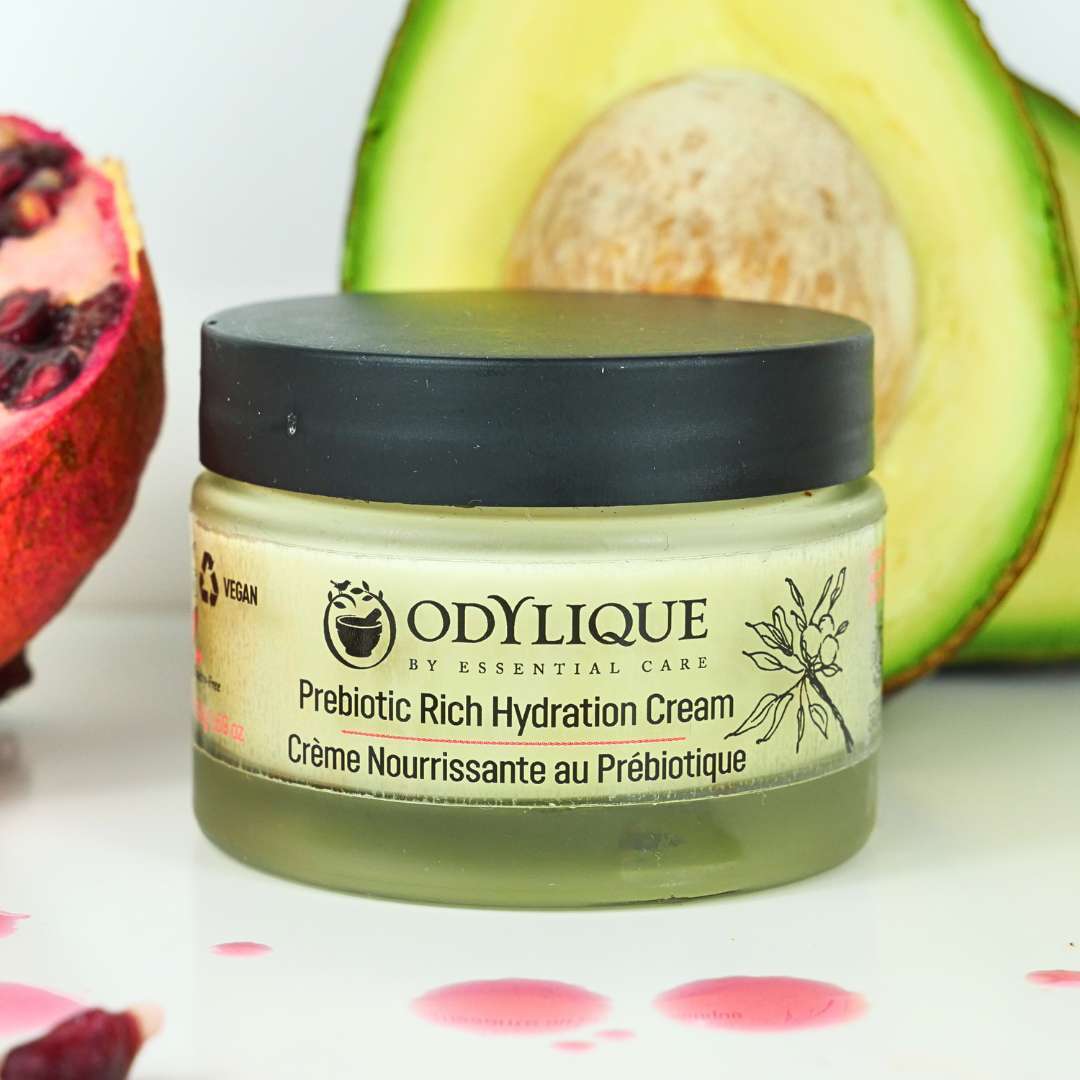
You'll find our acacia-derived phytocollagen in Prebiotic Rich Hydration Cream, where it works alongside plant oils, butters, prebiotics and botanical extracts to moisturise and smooth the skin.
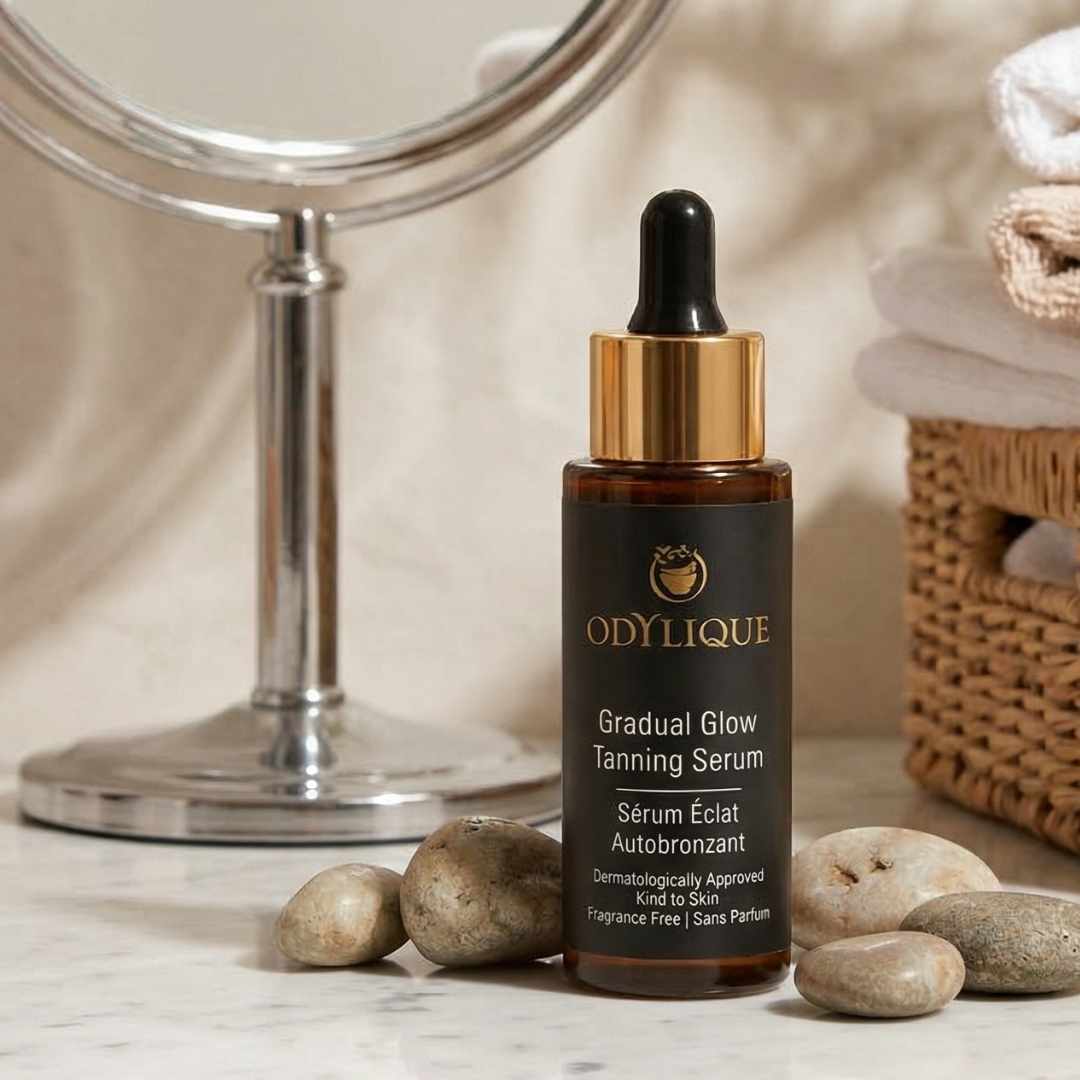
It’s also used in our Gradual Glow Tanning Serum, helping to give the lightweight formula its moisturising and smoothing properties.
And what about birch sap?
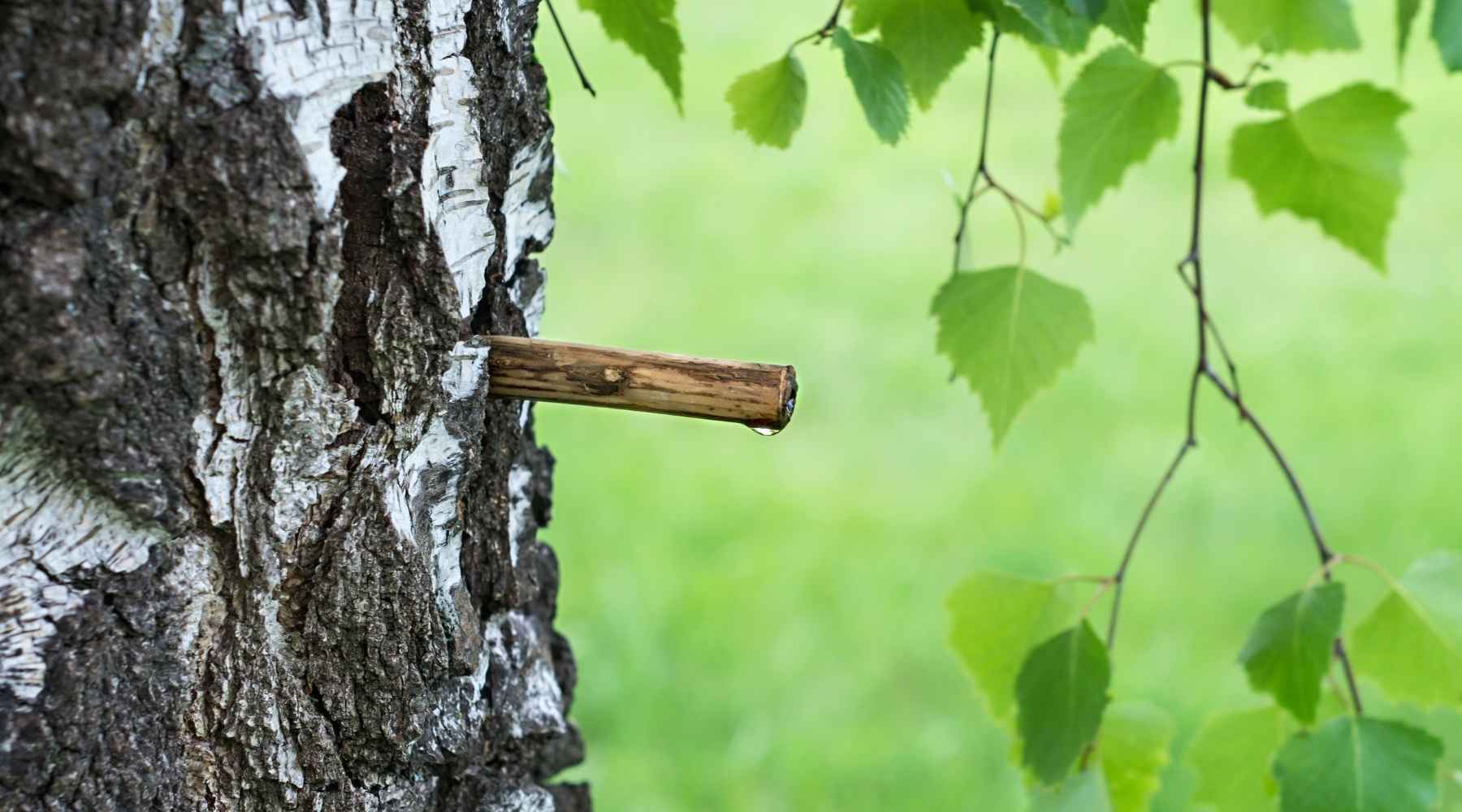
Trees have another skincare trick up their sleeves: sap.
Birch sap, sometimes called birch water or birch juice, is the clear, watery liquid collected from birch trees in early spring, when sap begins to rise through the tree.
It's quite different from a bark extract or a thick tree resin. It's essentially the tree's own sap, containing water along with naturally occurring sugars, amino acids, minerals and other plant compounds.
Birch sap is now used in a number of skincare formulations, particularly those designed to hydrate and condition the skin. There is some clinical research behind this use too. One study of a cosmetic formulation containing Betula alba sap found a significant improvement in skin hydration after both one hour and four weeks of use, although the evidence base is still relatively small.
We don't currently use birch sap at Odylique, but it's another fascinating example of how many different parts of a tree can provide useful ingredients for skincare.
What do trees have to do with skincare?
Quite a lot, as it turns out.
Trees have spent millions of years developing ingenious ways to protect themselves, retain water and maintain their structure. Some of the complex molecules they make for these purposes can be surprisingly useful in skincare too.
Larch gives us galactoarabinan, a natural polysaccharide obtained from its wood that helps form a lightweight film, support hydration and improve the feel of skincare formulations.
Acacia gives us the raw material for phytocollagen, a plant-based polymer complex obtained from its natural gum that can form a moisturising film and provide some of the cosmetic benefits traditionally associated with collagen.
Birch gives us sap, a water-rich material that can be incorporated into skincare formulations for its moisturising and conditioning properties.
Wood. Gum. Sap.
Trees have rather more to offer than we might imagine.
And that's one of the things we love about clever natural ingredients: the best solutions aren't invented in a laboratory. They've been growing quietly in a forest all along.