
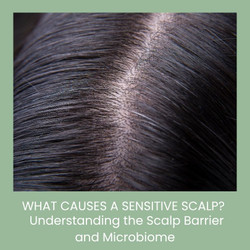
Most of us expect our scalp to be something we simply don't notice.
When it's healthy, we rarely think about it. But when the scalp becomes sensitive, it can quickly become impossible to ignore. Washing your hair may leave it feeling tight, certain products may sting, or you may find yourself constantly scratching despite having little or no dandruff.
Far from being unusual, scalp sensitivity is remarkably common. Studies have found that around four in ten adults describe their scalp as sensitive, with symptoms including itching, burning, tingling and discomfort. Heat, shampoos and environmental stressors are among the most frequently reported triggers.
Increasingly, scientists believe that these symptoms are closely linked to two important factors: the scalp barrier and the scalp microbiome. When either becomes disrupted, the scalp may become more reactive and less resilient.
What is a sensitive scalp?
A sensitive scalp is not a medical diagnosis, but rather a collection of symptoms that can include itching, tightness, burning, tenderness or discomfort. Sometimes these symptoms occur alongside visible signs such as redness or flaking, but often the scalp appears perfectly normal.
This can make scalp sensitivity frustrating. Many people assume dandruff is the cause of any scalp discomfort, yet a sensitive scalp can occur even when there are no visible flakes.
Like the skin on the face, the scalp is exposed to environmental stress, cleansing products, UV radiation and changes in temperature. Over time, these factors can affect both the scalp barrier and the scalp microbiome, increasing the likelihood of irritation.
The scalp barrier: your first line of defence
The outermost layer of the scalp acts as a protective barrier. Its role is to retain moisture while preventing irritants, allergens and potentially harmful microorganisms from penetrating the skin.
When this barrier is functioning well, the scalp remains comfortable and resilient. However, repeated exposure to harsh cleansing agents, environmental stressors or excessive washing can weaken this protective layer.
A compromised scalp barrier often leads to increased water loss, leaving the scalp feeling dry, tight and more vulnerable to irritation. Many people notice that their scalp becomes uncomfortable immediately after washing, which can be one of the first signs that the barrier has been disrupted.
Common causes of scalp sensitivity
One of the most common causes of scalp sensitivity is the use of overly harsh haircare products. Many conventional shampoos are designed to create a rich lather and remove oil efficiently, but in some cases they can also strip away the scalp's natural protective oils. Over time, this may contribute to dryness and irritation.
Environmental factors can also play a significant role. Cold weather, central heating, pollution, hard water and prolonged sun exposure can all place stress on the scalp. Just as facial skin can become more reactive under these conditions, the scalp can respond in much the same way.
Some people are particularly sensitive to specific ingredients found in haircare products. Fragrance, certain preservatives, harsh detergents and highly concentrated essential oils may all trigger discomfort in susceptible individuals.
Underlying skin conditions can also contribute to scalp sensitivity. Eczema, seborrhoeic dermatitis, psoriasis and allergic contact dermatitis may all affect the scalp and should be considered if symptoms are severe, persistent or worsening.
The role of the scalp microbiome
The scalp is home to a diverse ecosystem of bacteria, yeasts and other microorganisms that collectively form the scalp microbiome.
Far from being harmful, many of these microorganisms perform important functions. They help maintain the scalp's natural balance, interact with the skin barrier and contribute to overall scalp health.
Research suggests that disruption of the scalp microbiome may be associated with increased irritation, inflammation and sensitivity. Factors such as harsh cleansing, environmental stress and skin barrier damage can all influence microbial balance.
While scientists are still uncovering exactly how the scalp microbiome functions, there is growing interest in supporting this ecosystem as part of a holistic approach to scalp care.
How prebiotics can support scalp health
One of the most exciting developments in scalp care is the use of prebiotics.
Unlike probiotics, which introduce live microorganisms, prebiotics help nourish and support beneficial microorganisms already present on the skin. By helping to create favourable conditions for these microbes, prebiotics may contribute to a healthier and more balanced scalp environment.
A balanced microbiome is increasingly recognised as an important factor in maintaining scalp comfort, resilience and healthy barrier function.
One of the best-known cosmetic prebiotics is chicory root extract, which has been incorporated into both skincare and haircare formulations designed to support sensitive skin and scalp concerns.

Choosing haircare for a sensitive scalp
If you have a sensitive scalp, it is worth looking beyond your hair type and considering how your products support scalp health.
Gentle cleansing is often more beneficial than aggressive oil removal, particularly if your scalp already feels dry, tight or reactive. Products that support the skin barrier and microbiome may help improve long-term comfort, rather than simply masking symptoms.
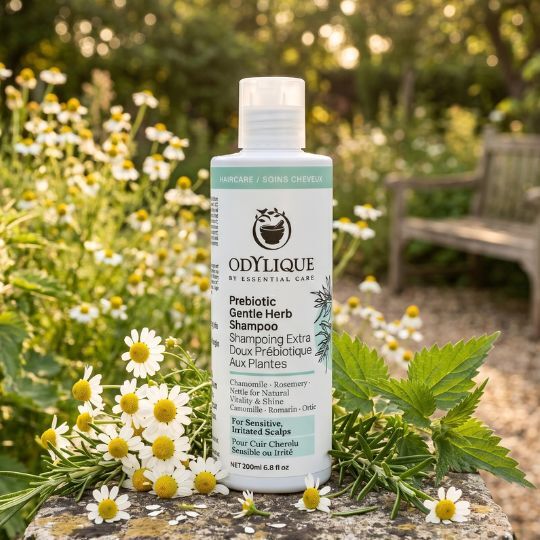
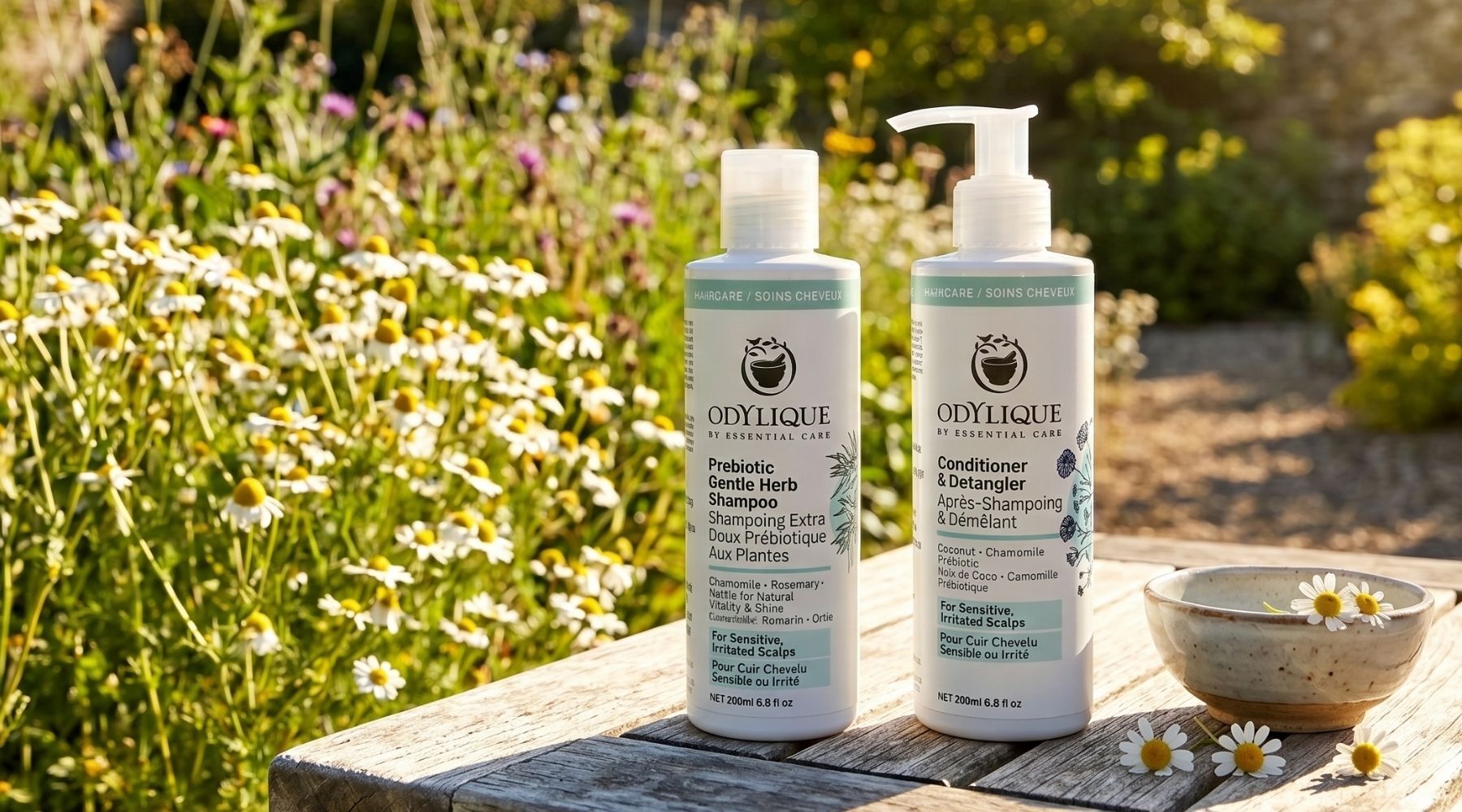
Odylique's Prebiotic Gentle Herb Shampoo was developed with this philosophy in mind. The formula combines prebiotic chicory extract, which helps support a balanced scalp microbiome, with soothing botanical ingredients including chamomile. Rather than stripping the scalp, it is designed to cleanse gently while helping maintain the scalp's natural balance.
Following with Odylique's Prebiotic Chamomile Conditioner can provide additional support for sensitive scalps. Like the shampoo, it combines microbiome-supportive prebiotics with calming botanical ingredients, helping to leave both hair and scalp feeling comfortable and nourished.
Simple ways to calm a sensitive scalp
In many cases, small changes can make a meaningful difference. Washing with lukewarm rather than very hot water, reducing unnecessary styling products and avoiding excessive scratching can all help minimise irritation.
Protecting the scalp from excessive sun exposure is also important, particularly during summer months when UV radiation and heat can contribute to barrier disruption.
Most importantly, try to avoid constantly switching products in search of a quick fix. The scalp barrier and microbiome often benefit from consistency, and it may take several weeks to notice the full benefits of a gentler routine.
Final thoughts
A sensitive scalp is often a sign that the scalp's natural protective systems have become disrupted. Whether the trigger is harsh cleansing, environmental stress, ingredient sensitivities or an underlying skin condition, the result is often the same: a scalp that feels less comfortable and more reactive.
As our understanding of the scalp microbiome continues to grow, it is becoming increasingly clear that scalp health is about more than simply cleansing the hair. Supporting the scalp barrier, maintaining microbial balance and choosing gentle, microbiome-friendly products can all help create a healthier environment for both scalp and hair.
For those experiencing ongoing scalp sensitivity, taking a gentler, more supportive approach may be the first step towards lasting comfort.