
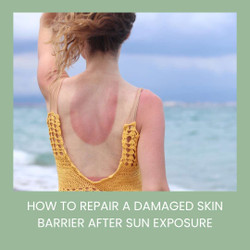
Sunshine can lift our mood and help support vitamin D production, but too much UV exposure can place significant stress on the skin barrier, especially if your skin is already sensitive, dry or reactive.
After time in strong sun, skin often feels tight, dehydrated, itchy or unusually sensitive. Even without visible sunburn, UV exposure can disrupt the skin’s protective barrier and affect the balance of the skin microbiome.
The good news is that skin can recover well with the right support.
What happens to the skin barrier after sun exposure?
The skin barrier is the outermost protective layer of the skin. Its job is to:
- retain moisture
- keep irritants out
- help regulate inflammation
- support the skin microbiome
UV radiation increases oxidative stress and inflammation within the skin. This can weaken the barrier and increase transepidermal water loss (TEWL), meaning moisture escapes more easily from the skin’s surface.
As the barrier becomes disrupted, skin may become:
- dry or flaky
- red or hot
- tight
- itchy
- more reactive to skincare products
- prone to stinging or irritation
For people with eczema-prone, rosacea-prone or sensitive skin, this effect is often more noticeable.
Sun exposure can also affect the skin microbiome
The skin microbiome is the ecosystem of beneficial microorganisms that live on the skin’s surface and help support healthy barrier function.
Research increasingly suggests that UV exposure can temporarily disrupt this delicate balance. Excessive sun exposure may reduce microbial diversity and contribute to inflammation and barrier impairment.
When the microbiome becomes unbalanced, skin may take longer to recover from environmental stress.
This is one reason why supporting the skin microbiome after sun exposure is becoming an important area in modern skincare formulation.
Why prebiotics may help stressed skin recover
Prebiotics are ingredients that help support beneficial microorganisms already living on the skin.
Rather than adding live bacteria to the skin, prebiotics help create an environment in which healthy skin flora can thrive. This may help support:
- barrier recovery
- hydration balance
- skin resilience
- reduced visible irritation
Emerging research suggests that maintaining a balanced microbiome may help skin recover more effectively after environmental stressors such as UV exposure and heat.
This is particularly relevant for sensitive skin after sun exposure, where the skin barrier and microbiome are often already more vulnerable to disruption.
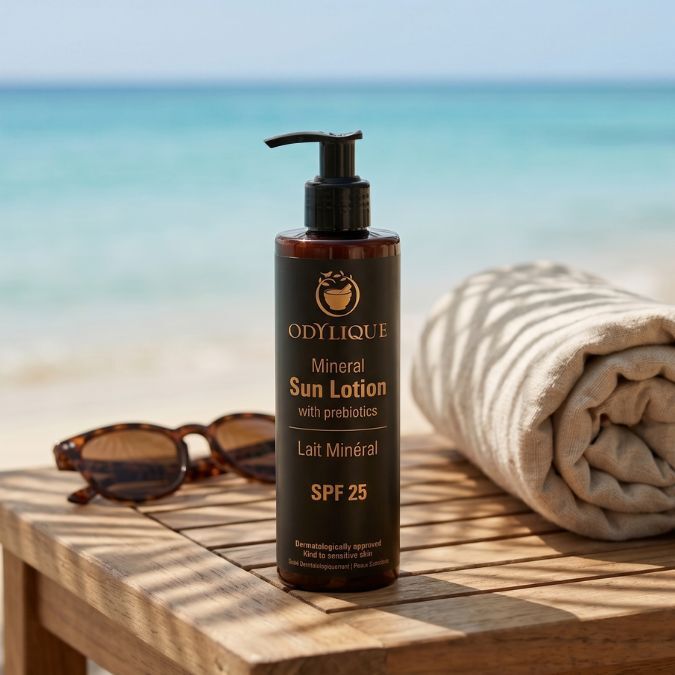
Including microbiome-supportive ingredients alongside broad-spectrum sun protection may therefore help support skin comfort during periods of increased sun exposure. Try ou Mineral Sun SPF 25 Lotion with Prebiotics:
Signs your skin barrier may be damaged after sun exposure
Not all sun damage appears as obvious sunburn.
Common signs of a compromised barrier include:
- skin feeling tight after cleansing
- increased redness
- stinging when applying skincare
- rough texture
- flaky patches
- sensitivity around the eyes
- dehydration despite using moisturiser
- increased reactivity to products that normally feel comfortable
Often, the skin simply feels “out of balance”.
How to help repair a damaged skin barrier after sun exposure
1. Simplify your skincare routine
After significant sun exposure, skin is usually more reactive than normal.
This is not the ideal time for:
- exfoliating acids
- retinoids
- scrubs
- strong active ingredients
- heavily fragranced products
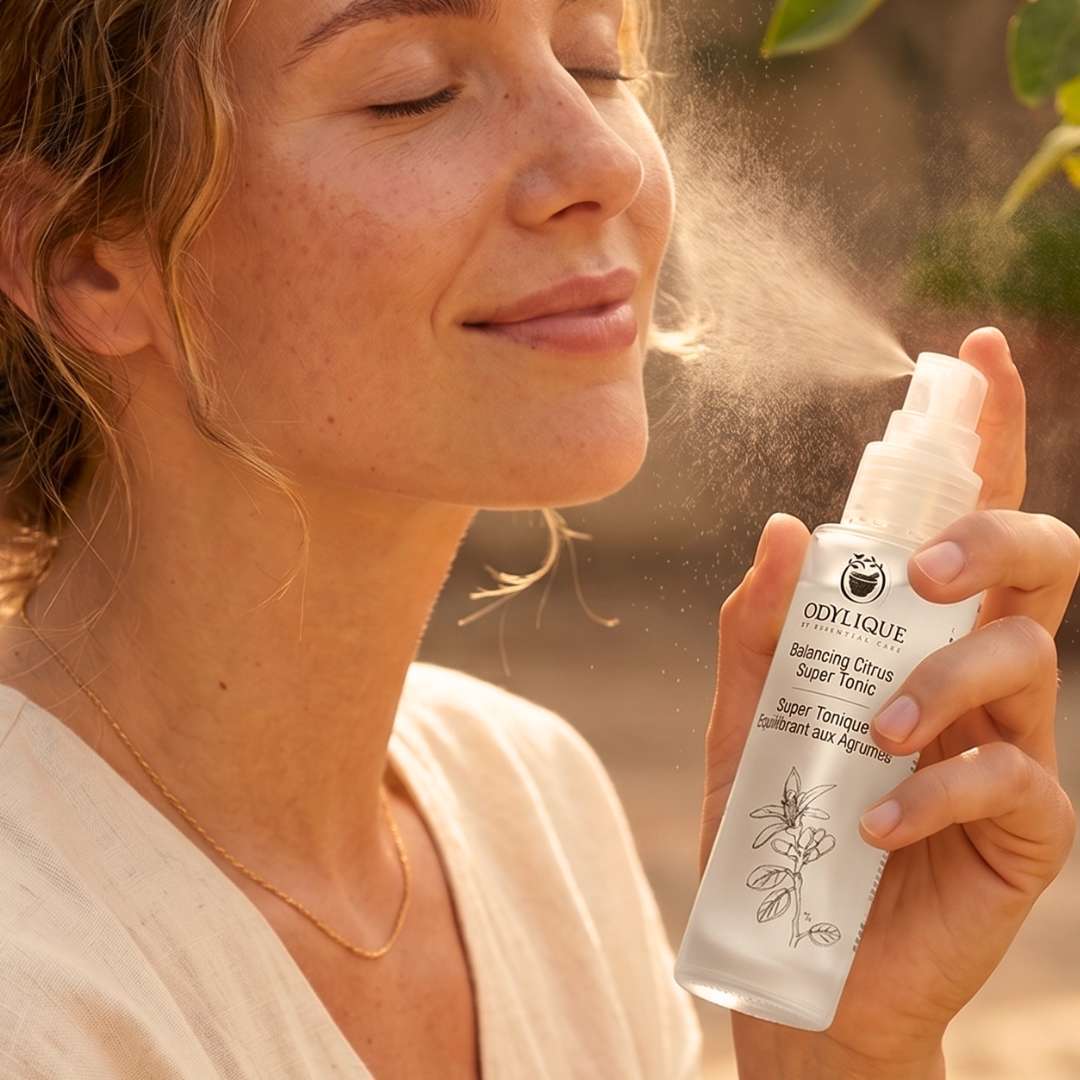
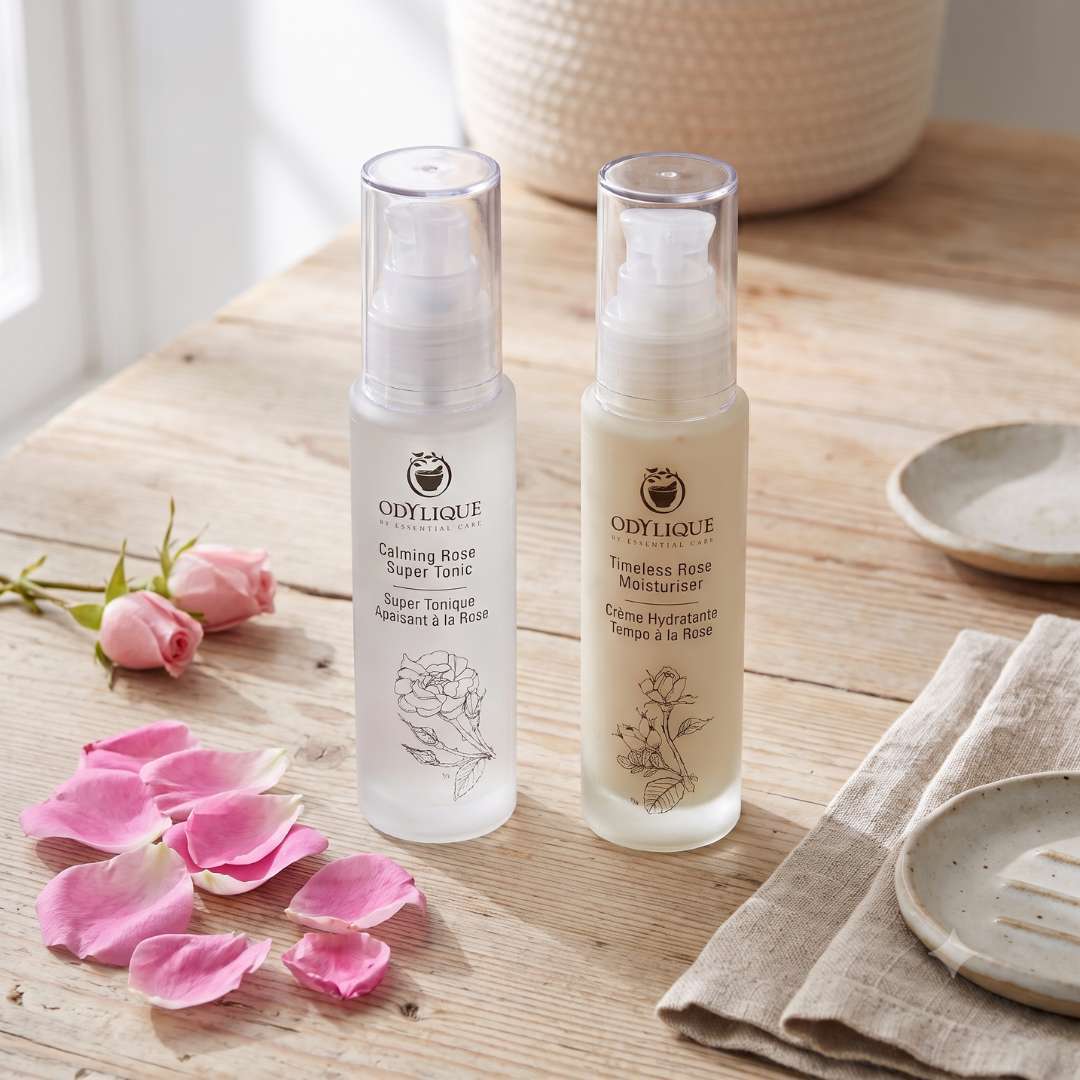
Instead, focus on a minimal routine centred around gentle, hydrating cleansing, moisturising and barrier support.
2. Rehydrate the skin
Sun exposure increases water loss from the skin, so replenishing hydration is important.
Look for ingredients that help attract and retain moisture, such as:
- glycerin
- aloe vera
- hyaluronic acid
- oat extract
Hydration helps reduce feelings of tightness and discomfort while supporting barrier recovery.
Repair Lotion with its rich aloe vera content and calming herbal extracts is ideal for the body or face.
3. Support the skin barrier with nourishing lipids
The skin barrier relies on lipids to remain healthy and resilient.
Gentle plant oils and barrier-supportive ingredients can help soften dry, stressed skin and reduce moisture loss.
Sensitive skin often responds better to calming, non-aggressive formulations rather than heavily active treatments after sun exposure.
Superfruit Concentrate will be soaked up by your skin after a long day in the sun and will give you a healthy-looking evening glow.
4. Avoid over-cleansing
Sweat, SPF and heat can make people feel they need to cleanse repeatedly during hot weather.
But excessive cleansing may further disrupt the skin barrier and microbiome.
Use a gentle cleanser (Creamy Coconut Cleanser or Silk Touch Cleanser are ideal) and avoid very hot water, which can increase dryness and redness.
5. Continue using sunscreen
If skin already feels damaged, it may be tempting to stop using SPF creams altogether. However, compromised skin is often even more vulnerable to UV stress.
Gentle mineral sunscreens based on zinc oxide are often better tolerated by sensitive or reactive skin because they provide protection without relying on chemical UV filters that may trigger stinging in some people.
6. Help support the microbiome
Barrier repair and microbiome health are closely connected.
Using skincare that includes microbiome-supportive ingredients such as prebiotics may help maintain a healthier skin environment while skin recovers from heat and UV exposure.
This is particularly useful for skin that becomes easily irritated, dry or reactive in the sun.
Try Prebiotic Rich Hydration Cream.
How long does the skin barrier take to recover?
Mild barrier disruption may improve within a few days if skin is protected and irritation is reduced.
More significant damage can take several weeks to fully recover, especially if skin continues to be exposed to:
- strong UV
- over-exfoliation
- harsh cleansers
- excessive heat
- drying skincare products
Consistency is usually more effective than using multiple intensive treatments at once.
Final thoughts
Sun exposure does not only affect the visible surface of the skin. Heat and UV can disrupt the skin barrier, increase dehydration and temporarily affect the balance of the skin microbiome.
For sensitive skin, supporting recovery gently is often the best approach.
Applying broad-spectrum sun screen, and a combination of calming hydration, barrier-supportive ingredients and microbiome-friendly skincare can help skin feel more comfortable, resilient and balanced during periods of increased sun exposure.